Behind the scenesJuly 2026
How we wrap furniture so nothing gets scratched
 MaxSupervisor at Reliable Moving Services
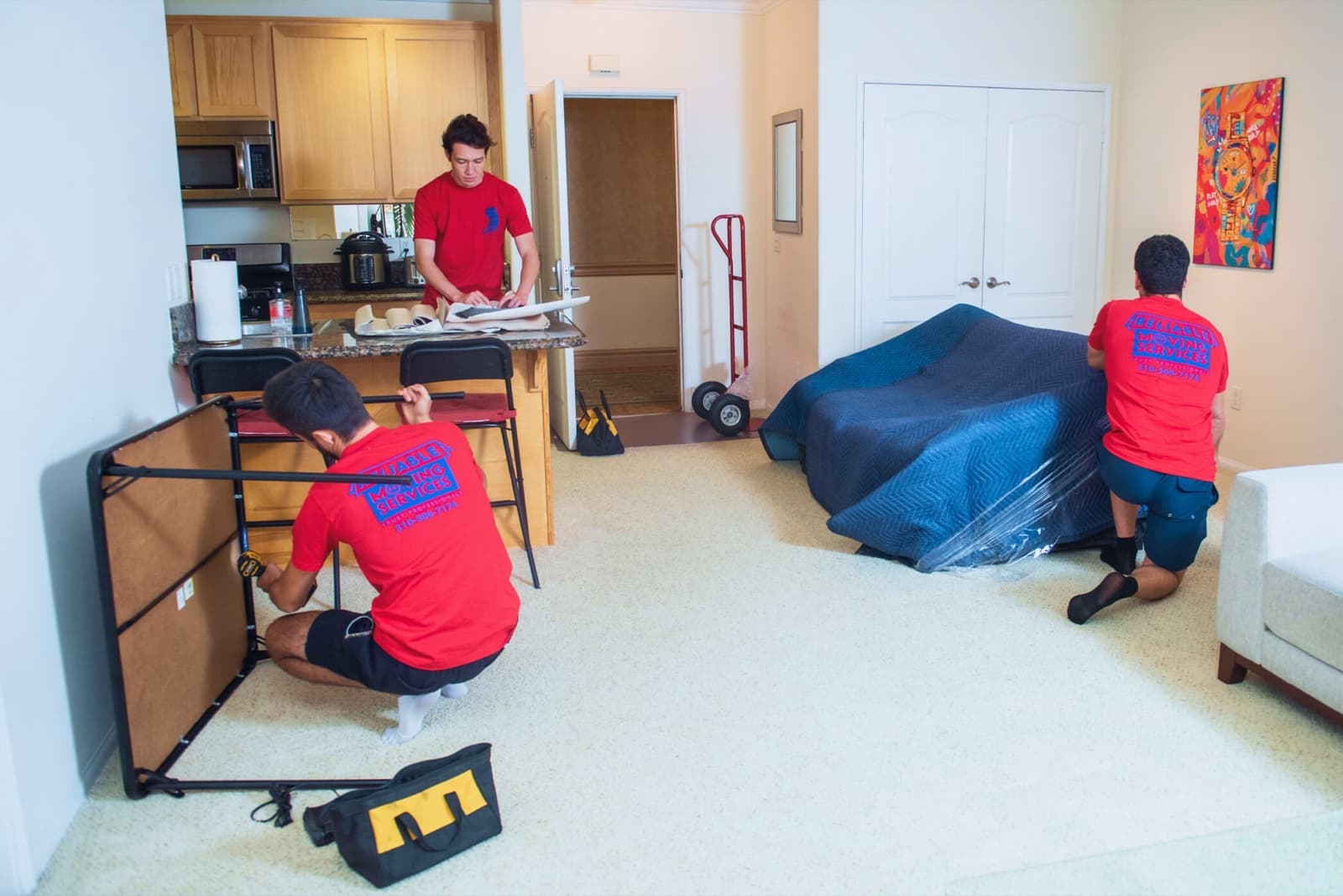
Furniture almost never gets damaged on the road. It gets damaged in doorways, on stair corners, and on truck ramps — the places where a sofa meets a wall at the wrong angle. That is why protection is not a blanket thrown over the top; it is a system, and it starts before we lift anything.
Here is exactly how our crews wrap the most common pieces, and why the order of the layers matters more than the amount of material.
The three layers that do the work
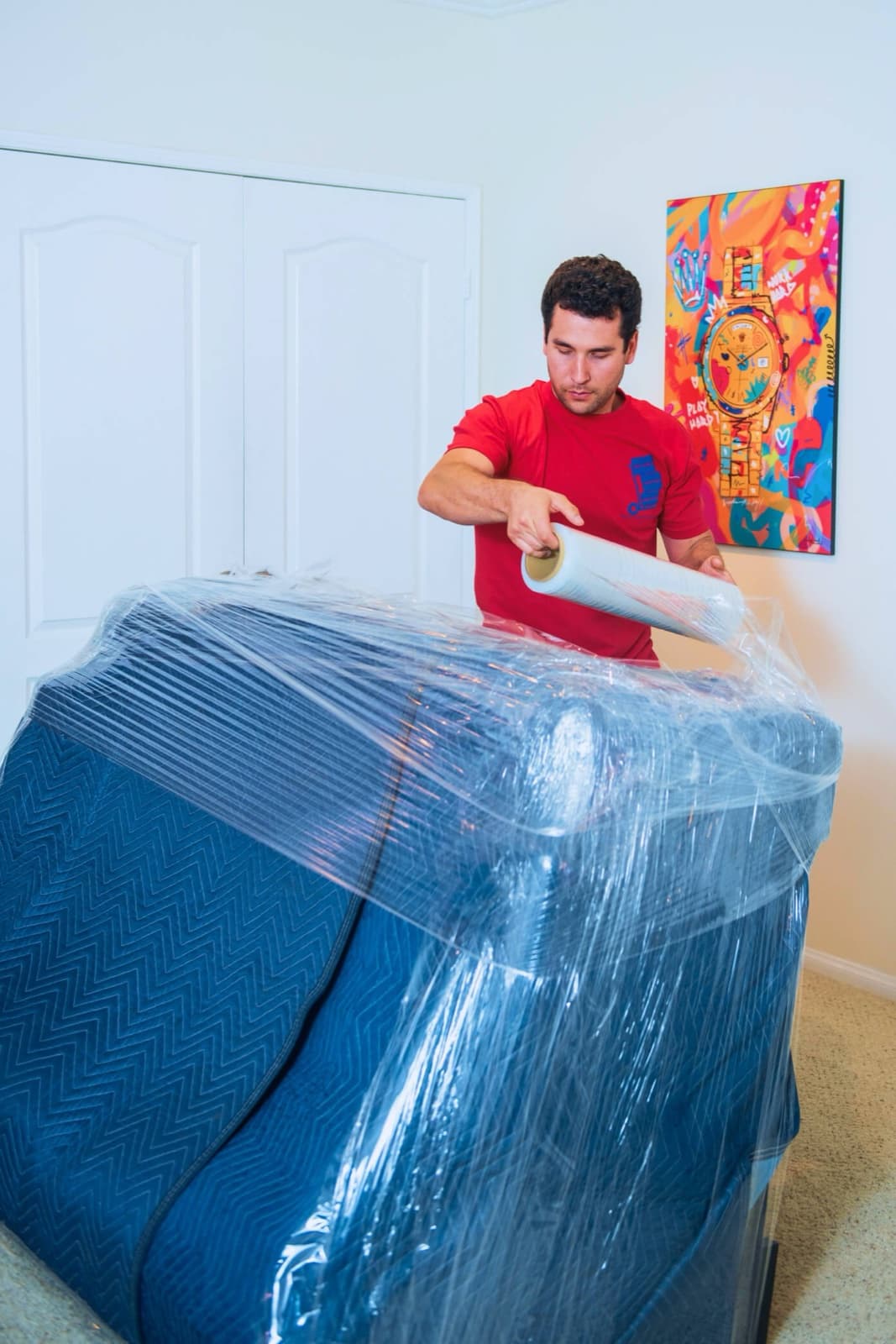
Almost everything we protect uses the same three materials: thick moving blankets for impact, stretch wrap to hold the blankets in place and keep out dust, and tape that only ever touches the wrap — never the furniture. Tape on bare wood or leather can lift the finish, so if you see tape in our wrapping, there is always a layer between it and your piece.
Sofas and upholstered furniture
Cushions come off and travel separately. The frame is covered edge to edge with blankets, then stretch-wrapped so nothing slides while it is carried. Upholstery needs to breathe, so plastic never sits directly on fabric and comes off as soon as the piece is placed in the new home.
Wood furniture: dressers, tables, and shelves
Legs come off dining tables whenever the design allows — a table with its legs on is mostly air, and air is how corners get knocked. Hardware goes into a labeled bag taped to the piece it belongs to, with wrap in between. Drawers are emptied of heavy items, corners get extra padding, and the whole piece is blanket-wrapped before it moves an inch.
Glass, mirrors, and TVs
Glass shelves, tabletops, and mirrors travel on edge, never flat — a mirror lying flat carries the weight of everything that shifts above it. Each one is padded, wrapped, and loaded between soft, stable pieces. TVs ride upright, never face-down, with padding across the whole screen.
Mattresses and beds
Mattresses are fully sealed in stretch wrap before they leave the bedroom, so the only thing that ever touches them is clean plastic. Bed frames are broken down, and every bolt goes into the same labeled-bag system as the table legs — reassembly at the new place starts with finding nothing missing.
We wrap the home, not just the furniture
Hardwood floors get runners laid along the whole carrying path, door jambs get padding on tight turns, and banisters get blankets on narrow stairs. It is the part of the job most people do not expect — and the reason the walls at both addresses look the same after the move as they did before it.
What you can do before the crew arrives
- Empty drawers of heavy and fragile items — folded clothes can usually stay
- Box up everything smaller than a shoebox: loose items slow the wrapping down
- Point out the pieces you worry about during the first walkthrough, so they get extra attention
- Keep hallways and doorways clear so the crew can carry in a straight line
All of this happens before the heavy lifting starts, and it is the least visible part of the work — when it is done right, the only evidence is that there is nothing to see. That is the standard our customers mention when they write about scratch-free hardwood and untouched walls, and we would like to keep it that way.